Google Measures "Health Age" from Wearable Data, Forecasts 12 Weeks Ahead
New research calculates a "health age" from step counts and sleep duration, then predicts how your body would change if you altered your habits. Google says these are research models, not clinical diagnostic tools.
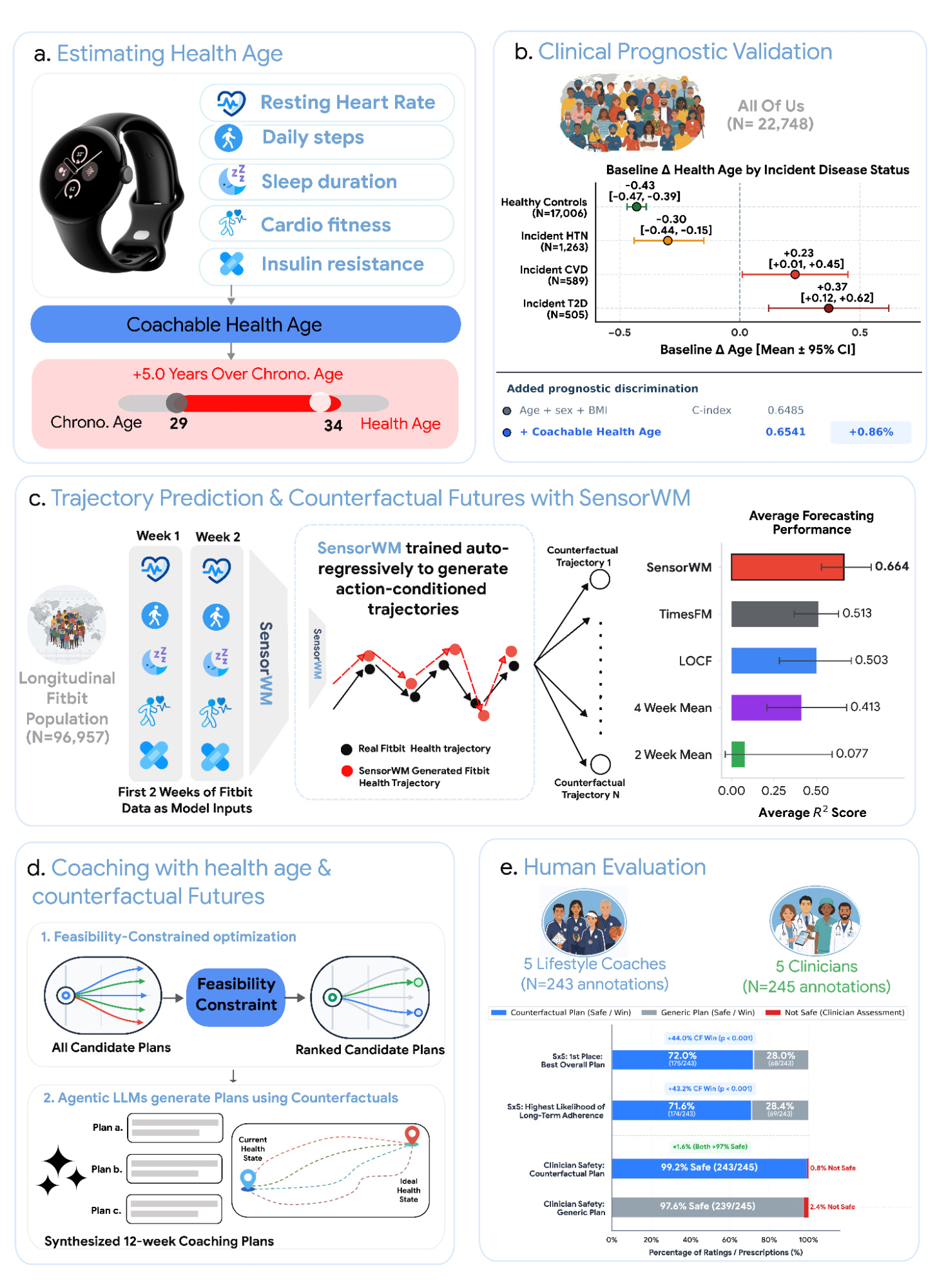
On November 11 local time, Google Research unveiled AI research that assesses health status using data from wearable devices. It also includes a capability that predicts how the body would change over the next 12 weeks if a person altered their lifestyle habits. The approach calculates a “health age” based on inputs such as step counts and sleep duration. Google released a companion study as well, one that adds blood test results to examine cardiovascular, kidney, and metabolic health together.
How this differs from existing “biological age”
Google’s researchers point out that many existing biological age models are trained to predict a person’s chronological age. As a result, they tend to lean on traits that are hard to change, and they struggle to explain the effect of modifying any particular habit. This model instead focuses on linking behaviors that people can actually change in daily life to health indicators. It was designed on the foundation of epidemiological research into the relationship between lifestyle habits and cardiovascular and metabolic disease risk.
CHA, which stands for coachable health age, uses four basic streams of data: resting heart rate, daily step count, sleep duration, and Active Zone Minutes, a measure of weekly activity intensity. The model adjusts for effects that overlap across multiple indicators in order to calculate each habit’s individual contribution. If health age minus chronological age comes out to -3 years, that means the model assessed the person’s physical condition as three years younger than their actual age.
How might your health change over the next 12 weeks?
The job of predicting physical condition after a change in habits falls to the Sensor World Model (SensorWM). The researchers pre-trained this model on data from roughly 100,000 Fitbit users who consented to having their data used. The data was processed so individuals cannot be identified, and aggregating weekly records across people yields 2.28 million person-weeks. The model takes in the first two weeks of wearable data and projects how 20 physiological indicators would shift over 12 weeks under a given plan for steps, sleep, and aerobic exercise.
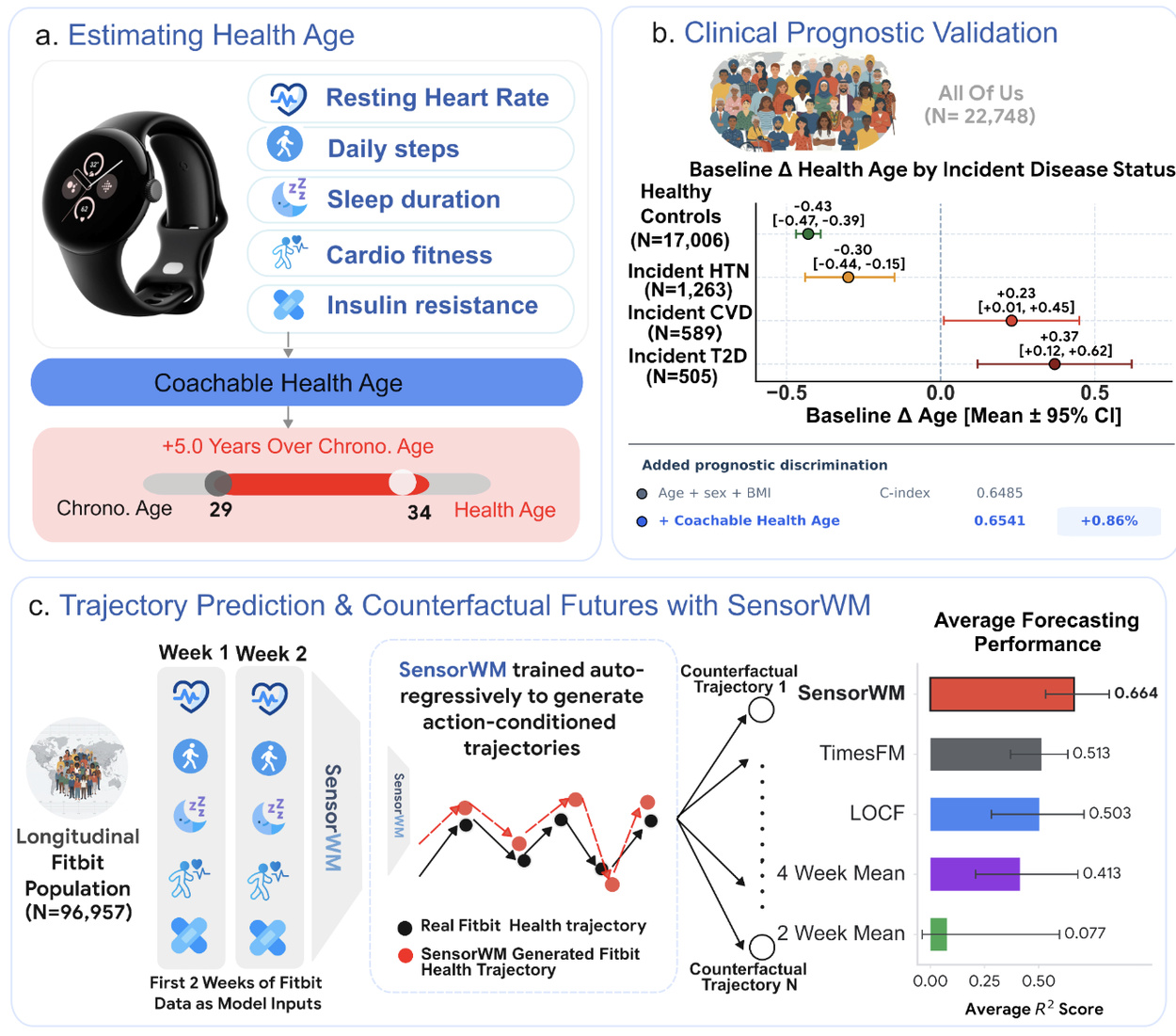
Image: research.google
When activity levels and sleep change, other indicators such as heart rate gradually shift as well. The researchers set out to capture these relationships in their predictions. Google says SensorWM outperformed general-purpose models that forecast data over time, such as TimesFM. On top of that, the team added a component that selects plans by weighing how feasible they are, plus a language-model-based coaching feature. The idea is to let users preview the expected outcomes of several different plans before they change their habits.
The team also ran a comparative study evaluating the quality of the coaching advice. Five lifestyle coaches and five physicians specializing in relevant fields reviewed the profiles of 49 participants and completed 490 evaluations. The method placed side by side the advice produced when the same language model was given only wearable data versus when it was also given predictions of future change. An automated evaluation was conducted as well, covering 2,780 participants in the WEAR-ME study.
What blood tests add to the picture
The companion study addresses what is known as CKM health, where cardiovascular, kidney, and metabolic problems become intertwined. It combined wearable data from 819 WEAR-ME participants with blood test markers: the ratio of cholesterol to HDL, a measure of kidney filtration function, and a marker of insulin resistance. The researchers explained that metabolic and cardiovascular burden tended to appear together. Early declines in kidney function, by contrast, often showed up on their own. The approach aims to examine health changes across different organs in a single view.
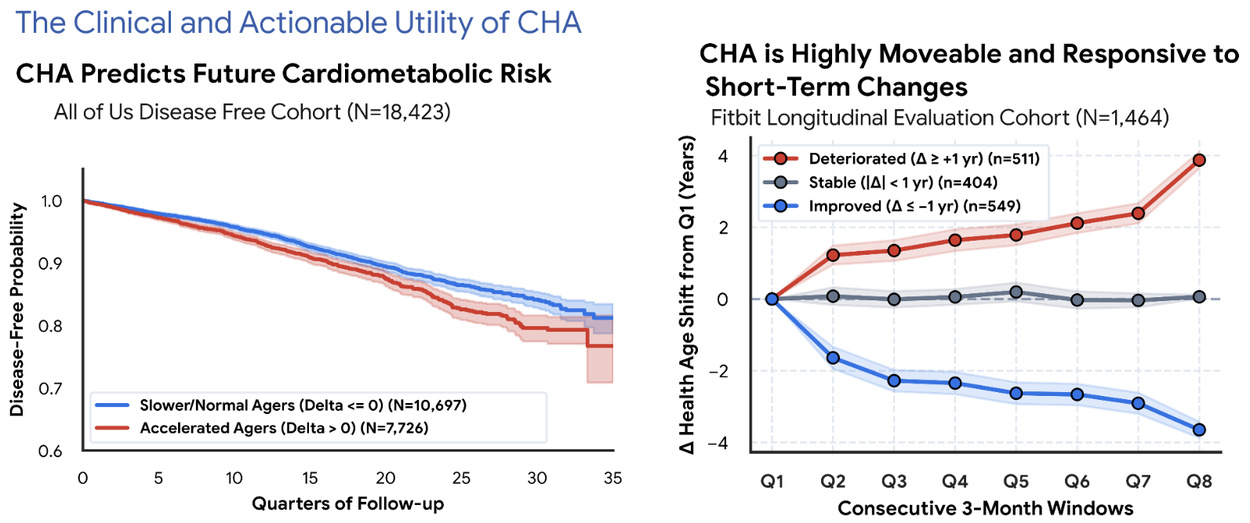
Image: research.google
Google says it evaluated the models on historical data it had already collected, and described them as research prototypes rather than clinical diagnostic tools. What remains is to confirm, through trials that follow real users over a set period, whether this kind of coaching leads to sustained changes in habits and long-term health improvements. It is an attempt to expand such records—which used to show how much you walked and slept yesterday—into coaching that tells you what to change next.