Google Unveils Proof of a Hard Math Problem, with Multiple AI Models Splitting the Solving and the Verifying
Using Antigravity's /teamwork, humans and multiple AI models tackled math and engineering problems together. Deep Review, which critiques paper drafts, is free twice a week.
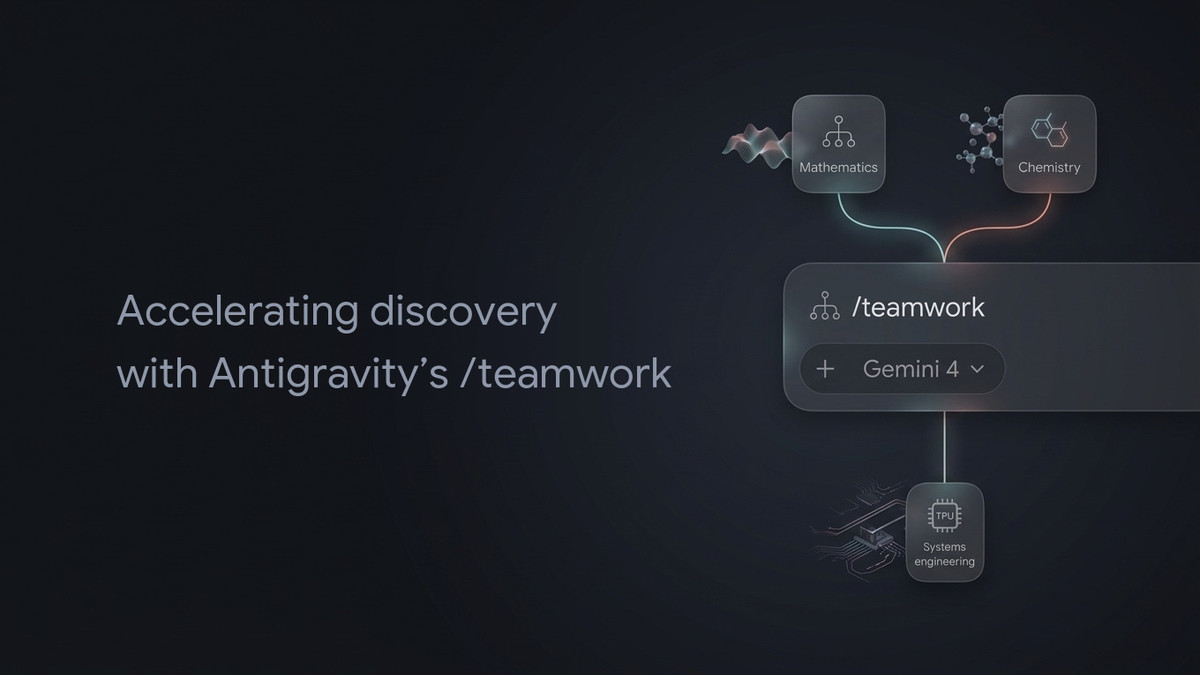
On November 13 local time, Google unveiled a set of math, science and engineering results produced with Antigravity’s /teamwork feature. The work used Gemini 4 Argon, Gemini 4 Carbon and Gemini 4 Hydrogen, along with multi-AI collaboration approaches such as /teamwork. Google said it worked alongside university researchers to make progress on problems that had resisted solutions for years, and that it is widening access to the underlying tools so outside researchers and developers can use them.
How multiple AI models split the work
/teamwork divides labor between models that attack the problem and models that check the results. Several candidate answers are explored in parallel, then run through proof checkers or software tests to confirm they actually hold up. Google said the design is meant to close the gap between the answer an AI produces in a single pass and the answer that is actually correct. Researchers set the question and supply the constraints that follow from the relevant theory or physical laws.
When a job stretches across several days, details are easy to lose. So each model receives only the files and tools that its assigned step requires. The models that review outputs do so without seeing the reasoning of the model that produced them. When a user enters a prompt, the instructions given to an AI, the system picks a collaboration pattern suited to the type of work, whether that is coding or reviewing a long proof.
How the math proof was verified
The flagship example is the Courtade-Kumar conjecture, first posed in 2013. It asks whether, when compressing an input down to a single bit over a noisy communication channel, any scheme can preserve more information than simply copying one of the input bits. Google and researchers at CUHK, USC and CMU said they used /teamwork to prove the conjecture in the general case. They passed the work back and forth: a person would propose a new candidate function, and the AI would break the problem into cases and analyze each one.

Source: Google (press release)
The team then translated the proof into Lean 4, a tool that lets a computer check each logical step one by one. Google said the translated code ran to 50 million lines. A separate collaboration pattern, /teamwork-LEAP, was used to convert existing mathematical proofs into machine-checkable code. Google said it rendered the Weil conjectures as roughly 1.8 million lines of Lean code. Pierre Deligne completed his proof of the Weil conjectures in 1974. Confirming that the statements being checked match the original mathematical problem is still a job for humans.
What researchers can use right now
Deep Review, a tool that reviews paper drafts, was also presented as a case study. Among papers submitted to the STOC 2027 conference, the authors of 578 of them requested a draft review. Of the 70 people who have responded so far to an ongoing survey, 90% judged the feedback they received to be mostly or almost entirely factually accurate. Another 90% of respondents said they would use it again. More than 30% said it caught a significant proof error or a mathematically meaningful typo.
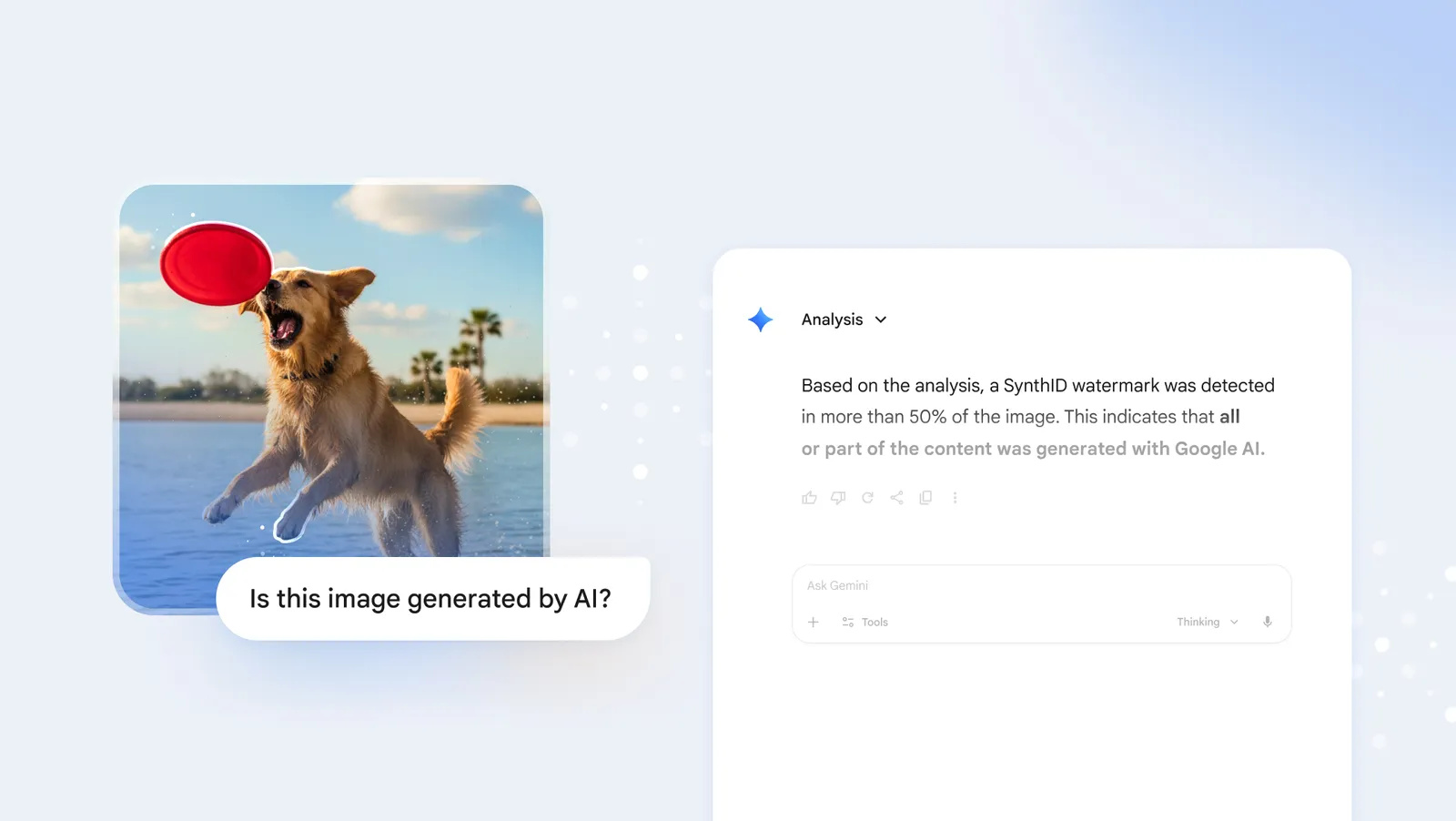
Source: Google (press release)
Google said Deep Review can be used free of charge twice a week. The feature is also available inside Antigravity as /teamwork’s document review mode. Google also introduced /boost, which iterates through generation and verification steps in sequence, along with several other research-oriented workflows. The company said many of these features are already available and that it will share news over the coming weeks about opening the full set to outside users.
What is different about this announcement is the scope of work being handed to AI. It goes beyond drafting answers to bundle in the process of exploring candidates in parallel and checking them for errors. Even in the results Google published, humans still defined the problems and confirmed the outcomes. How much this helps in real research and real jobs will depend on how much of the functionality outside users actually get, what verification turns up, and how accurate the paper review feedback proves to be.