One Developer's Pitch: Publish the Code Your AI Writes
Developer Jakub Jankiewicz wants code written with AI handed back to the community. At issue: the public code AI trained on, and what counts as human creative contribution.
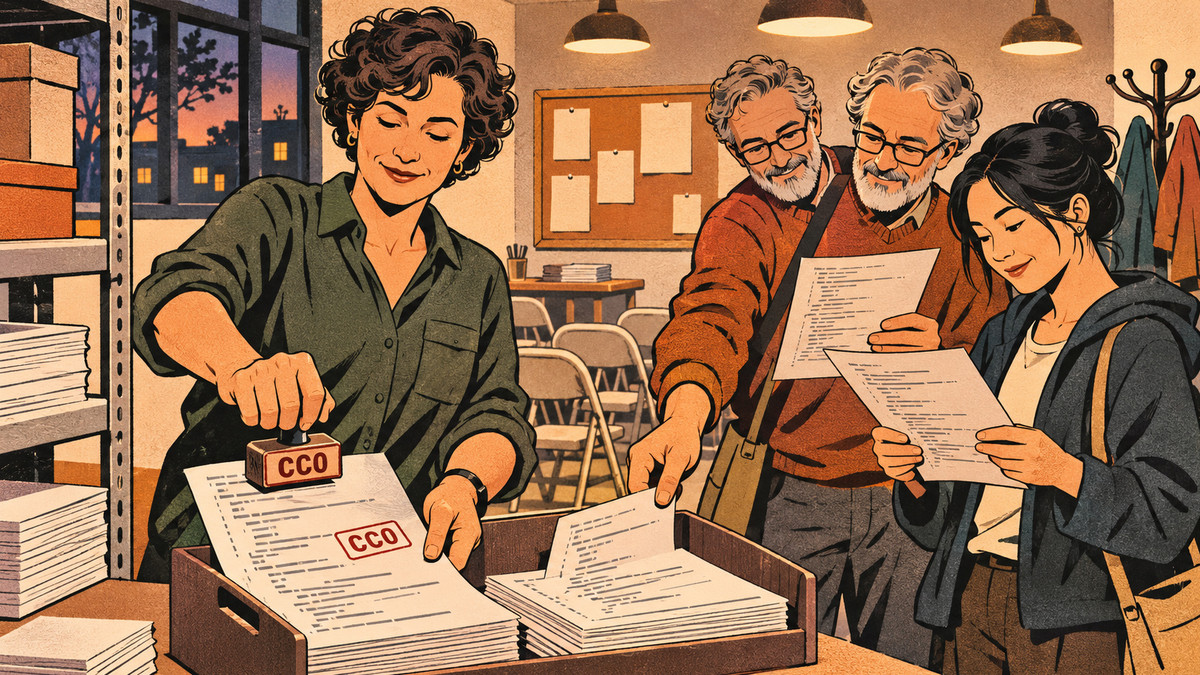
Developer Jakub Jankiewicz has proposed that code written with AI be released as open source or placed under CC0. CC0 is a tool for waiving copyright so that anyone can use a work freely. His reasoning: since the code AI models learned from came out of the developer community, what those models produce should go back to the community too.
Why release AI-written code?
Jankiewicz bases his argument on the fact that AI models were trained on publicly available code and on the collective knowledge of the developer community. If that is where the raw material came from, he argues, the output should be published as well so that others can use it in turn. The proposal is aimed at individuals and companies alike, anyone who uses AI to write code.
His second argument concerns copyright. It is not clear whether AI output that involves little or no human creative contribution can be copyrighted at all. Jankiewicz ties that uncertainty to his case for publishing the code. The US Copyright Office likewise uses human creative contribution as its yardstick when deciding whether AI-generated output qualifies for protection.
What about the parts a human made?
In a 2025 report, the US Copyright Office explained that a work can still receive copyright protection even if AI was used, provided a human determined enough of its expressive elements. In other words, what matters is not whether AI was involved but how much of the final expression a person actually decided.
The office did state, however, that merely entering prompts—the instructions given to the AI—is not enough. It drew a line between handing a task off to an AI and making a creative contribution to the expression of the result. For anyone writing code with AI, then, knowing which parts they decided themselves becomes a key factor in any copyright question.
What changes if you release under CC0?
CC0, the mechanism Jankiewicz points to, lets a rights holder waive copyright and related rights to the fullest extent the law allows. It is a choice to set aside one’s rights in the code and leave it in a state where anyone can use it.
CC0 has its limits. According to Creative Commons, a waiver of rights is not fully guaranteed in every country. And it does not apply to trademarks or patents at all.
The proposal raises the question of who holds which rights after code is written with AI, and what should be given back to the community. The same question faces developers and companies in South Korea. How far human creative contribution should be recognized, and what legal force CC0 carries domestically, are issues still to be worked out.